
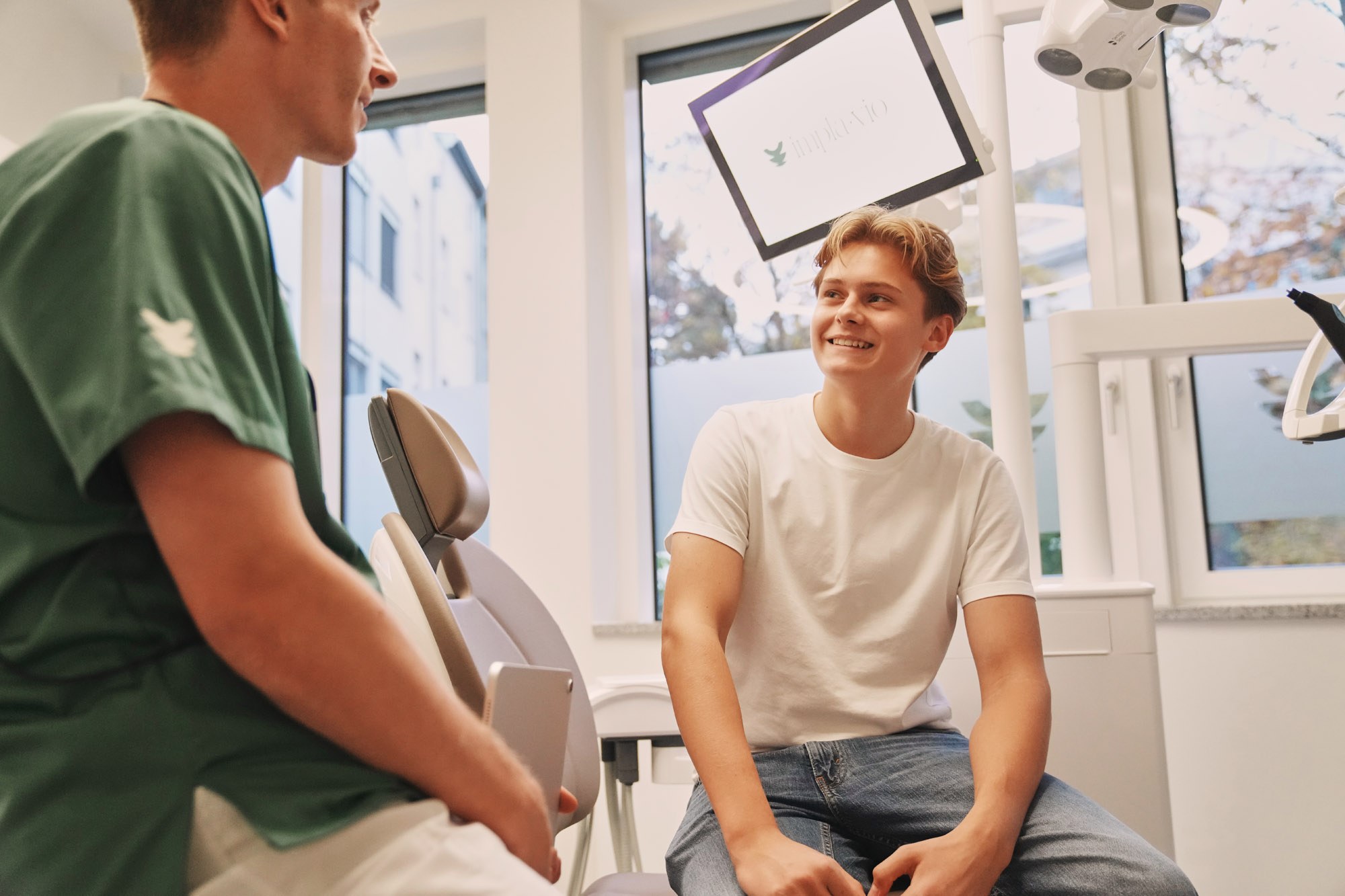
…and that is why many people end up staring at a list of local providers, wondering if they should walk into a massive clinic or a small family practice. If you’re looking for a dentist in Friedenau, you basically have two paths: you can go to a specialized practice focused on aesthetics or implants, or you can opt for a general family practice that handles everything from routine cleaning to wisdom tooth extractions.
The short answer is that Friedenau has plenty of qualified practitioners, from general dentistry to advanced restorative work. You can find highly specialized centers like Dental Studio Nassauische Str. or more traditional setups like the Zahnarztpraxis Friedenau Dr. M. Sharaf und Partner located at Menzelstraße 2.
Navigating the local dental scene isn’t just about how close the office is to your apartment. It’s about understanding what kind of dental work you actually need before you book that first appointment.
Which type of practice fits your specific dental needs?
Not every dental office is equipped to handle every procedure. Some practitioners focus heavily on Prophylaxe (preventative care) and routine checkups, while others lean into the high-tech world of dental implants and complex restorative work. If you just need a cleaning, a generalist is your best bet. They see a huge variety of patients and can catch small issues before they turn into expensive problems.
However, if you’re dealing with missing teeth or significant bone loss, you might need a specialist. For instance, if you’ve been researching Erfahrungen mit Zahnimplantaten in Friedenau, you’ll realize that implantology requires a specific set of surgical skills and diagnostic imaging that not every neighborhood dentist keeps in their daily workflow.
A general practice might be great for your child’s first checkup. They often have a more relaxed atmosphere for kids who are nervous about the drill. A specialized implant center might feel a bit more clinical and efficient, which is exactly what you want when you’re undergoing a surgical procedure.
I often see patients get caught up in the “best” dentist debate when they should really be asking “what procedure do I need?” A dentist specializing in aesthetics might charge more for a veneer, but they have the specific training to ensure the shade matches your natural teeth perfectly. A general dentist will do a great job, but their focus is broader.
How do I choose between a private or a large dental center?
The “feeling” of a clinic matters. Some people prefer the intimacy of a small practice where the receptionist knows their name and the dentist has been in the neighborhood for twenty years. Others want the high-tech efficiency of a large dental center with five chairs and a dozen staff members. Neither is objectively better, but the experiences are different.
Small practices, like those on the residential streets near Menzelstraße, often have more flexible hours for working professionals. For example, looking at the schedule for Dr. M. Sharaf und Partner, you can see they stay open until 19:00 on Thursdays, which is a lifesaver if you can’t take a morning off work. Small offices often feel less rushed, though they might have a harder time with emergency walk-ins during peak hours.
Large centers are often better equipped for emergency dental work. If you crack a tooth on a Saturday night, a large facility with multiple practitioners is more likely to have someone on call. They also tend to have the latest digital scanning technology and 3D imaging, which makes the diagnostic process much faster. You might find that a Dentist Kersten or a similar local practitioner offers a balance between personal care and modern technology.
Consider your personality. If you get anxious when a doctor spends only ten minutes in the room with you, avoid the high-volume clinics. If you want to be in and out in twenty minutes with a digital X-ray ready in your inbox, go for the larger, more specialized centers. It’s a trade-off between time and intimacy.
When comparing your options, it helps to look at the specific services they list on their websites. Some might mention “Zahnmedizin Prophylaxe” prominently, while others focus on “Implantate.”
| Practice Style | Best For… | Typical Pros | Typical Cons |
|---|---|---|---|
| General Family Practice | Routine checkups, children, simple fillings | Personal relationships, familiarity, longer appointments | May lack specialized surgical equipment |
| Specialized Dental Center | Implants, oral surgery, advanced aesthetics | High-tech equipment, specialized expertise, efficient | Can feel impersonal, often higher cost |
What are the real costs of dental work in Berlin?
This is the question everyone asks, but the answer is never a single number. In Germany, the cost depends heavily on your insurance status, whether you are privately insured, through a public fund, or paying out of pocket. Public insurance (Kasse) covers the “necessary” part of the work, which is the bare minimum to stop pain or infection, but they won’t pay for “nice” things like premium ceramic colors or high-end implant brands.
If you want something more permanent and aesthetically pleasing, you are looking at “Mehrkosten,” or additional costs. This is where the price of a single crown or an implant can jump significantly. For instance, a standard filling might be covered, but a composite resin filling that looks exactly like your tooth might require a surcharge. This is a common point of friction between patients and doctors.
I remember a patient who spent three hours comparing different types of porcelain for a single front tooth, only to realize the price difference between the two options was actually quite manageable once her insurance covered the base procedure. People often get paralyzed by the fear of a high bill, but it is better to ask for a “Heil- und Kostenplan” (treatment and cost plan) upfront.
Once the dentist provides this plan, you can take it to your insurance company to see exactly what they will cover. This takes the guesswork out of it. Never agree to a major procedure, especially something involving implants or multiple crowns, without seeing that breakdown in writing first.
Why do some dentists charge so much more for implants?
Implants are not just a “tooth.” It is a surgical procedure that involves placing a titanium screw into your jawbone, waiting for it to fuse with the bone (osseointegration), and then attaching a crown on top. This is much more complex than a standard extraction or a filling. It requires specialized surgical training, sterile operating environments, and expensive hardware.
The cost of the implant itself is only part of the story; you’re also paying for the surgeon’s time and the specialized diagnostic imaging required to ensure the screw is placed at the perfect angle. If the angle is off by even a few millimeters, the entire procedure might fail, leading to more expensive corrective surgery later. That risk is baked into the initial price.
Many people ask why a dentist in Friedenau might charge differently than one in a more central district like Mitte. It often comes down to overhead costs, the specific brands of implants they use, and the level of technology in their practice. Always ask if the quote includes the final crown or just the implant screw itself.
How do I know if a dentist is actually good or just good at marketing?
The internet has made this easier, but it has also made it harder. A 5-star rating doesn’t always mean the dentist is a genius; it might just mean the waiting room has good magazines and the receptionist is nice. Conversely, a 2-star rating might just mean the office was running twenty minutes late because the doctor was dealing with a complex emergency.
Look for specific feedback rather than vague praise. You want to see comments like “They explained the implant procedure clearly and I didn’t feel rushed,” or “The cleaning was thorough but painless.” Avoid reviews that just say “Great dentist!” or “Bad service!” because they don’t tell you anything about the clinical quality. You are looking for technical competence, not just personality.
Another way to vet a practice is to look at their specialization. If a practice claims to be an expert in everything from pediatrics to oral oncology to cosmetic veneers, they might be a generalist who is “okay” at many things but “great” at none. The best dentists often have a niche, even if they maintain a general practice as their primary base.
When you walk into a clinic for the first time, pay attention to the hygiene. Is the staff wearing clean scrubs? Is the equipment organized? Is the office quiet and calm or chaotic and loud? A professional, calm environment usually indicates a well-managed, high-quality practice.
Always ask for a written estimate before agreeing to any treatment that isn’t an emergency.
Questions people ask
Where can I find a dental practice in Friedenau?
There are several dental practices located throughout the Friedenau district in Berlin, primarily situated near U-Bahn stations like Friedenau and Schöneberg.
Do dental practices in Friedenau offer emergency appointments?
Many practices in Friedenau offer emergency care, but it is recommended to call immediately to check availability for urgent dental issues.
Do dentists in Friedenau speak English?
Many dental practices in Friedenau cater to the international community and offer consultations in English.
What services are typically offered at a Friedenau dental clinic?
Standard services include professional teeth cleaning, fillings, root canal treatments, and restorative dentistry.
Do I need an appointment for a dental check-up in Friedenau?
While some clinics accept walk-ins, it is highly recommended to book an appointment in advance to ensure availability.